
Florida Family Court Records Database
Florida family court records are public documents maintained by the Clerk of Court in each of the state's 67 counties. These records include divorce filings, child custody orders, child support cases, and domestic violence injunctions. You can search for family court records through the Florida State Courts System or contact the local Clerk of Court office where the case was filed.
Florida Family Court Records Quick Facts
Where to Find Florida Family Court Records
Family court records in Florida are maintained at the county level by elected Clerks of Court. Each of the 67 counties has its own Clerk's office that handles case filings, record keeping, and public access to court documents. Family law cases are heard in Circuit Courts, which have jurisdiction over divorce, child custody, child support, alimony, adoption, and domestic violence matters.
The Florida State Courts System provides statewide coordination and resources for accessing court records. You can find family law forms approved by the Florida Supreme Court through their Self-Help Center. The website offers guidance for people who want to handle their own family law cases without an attorney. This includes forms for dissolution of marriage, child support, and domestic violence injunctions.
The Florida Court Clerks & Comptrollers association represents all 67 Clerks of Court. Their website includes a directory to help you find contact information for any county clerk in Florida. This is useful when you need to request records from a specific county or have questions about local procedures.
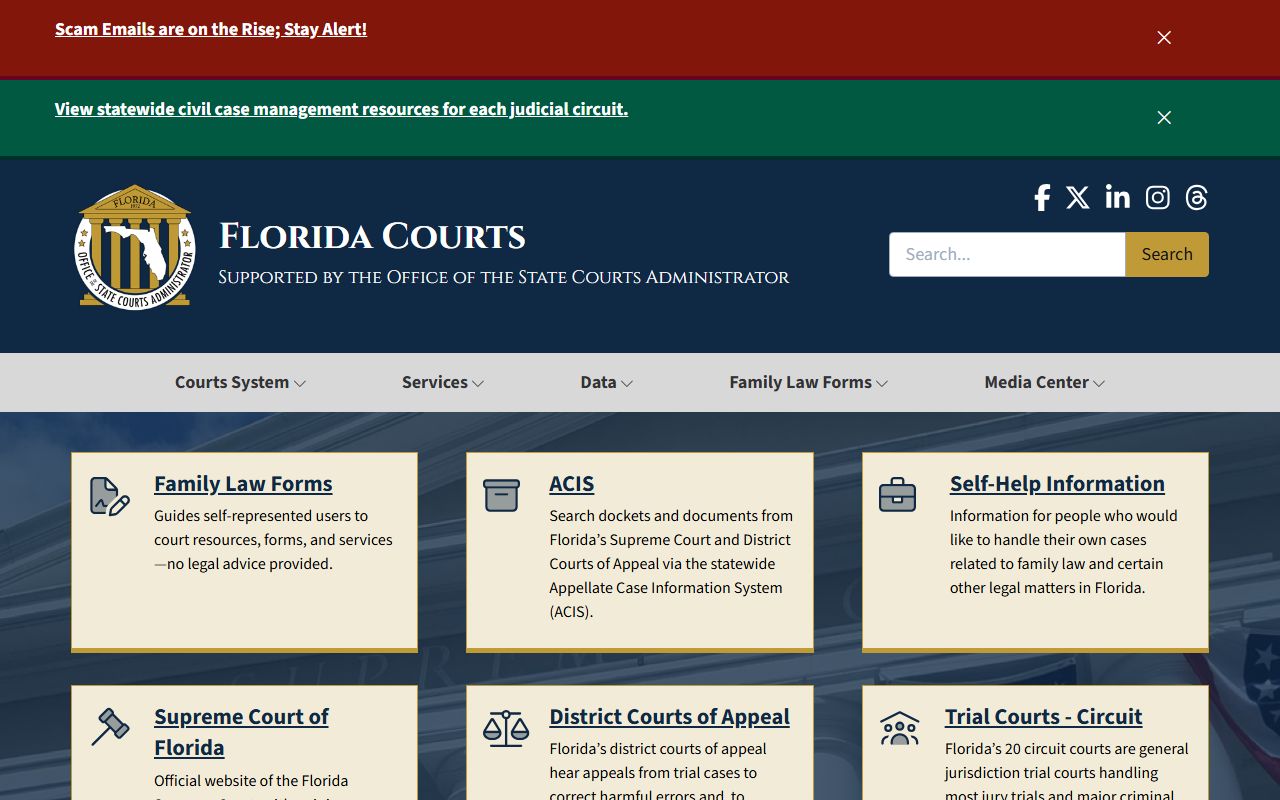
The Florida State Courts website offers a gateway to case information and court resources across all 67 counties.
Types of Family Court Records in Florida
Florida family courts handle many types of cases. Each creates records that are available to the public unless sealed by court order. Understanding what records exist helps you know what to search for.
Dissolution of marriage cases, commonly called divorce, are the most frequent family court filings. These records include the petition for divorce, financial affidavits, marital settlement agreements, and the final judgment. Chapter 61 of Florida Statutes governs divorce, child support, and alimony. The law requires a 20-day waiting period after filing before a divorce can be finalized. At least one spouse must have lived in Florida for six months before filing.
Child custody and time-sharing cases create detailed records. These include parenting plans that outline when each parent has the child. Child support cases involve financial affidavits and support guideline worksheets. The Florida Department of Revenue handles child support enforcement statewide. Their website provides information about applying for services and checking payment status.
Domestic violence cases move quickly through the courts. Florida Statute 741.30 prohibits filing fees for domestic violence injunction petitions. Temporary injunctions can be granted the same day and last up to 15 days. A full hearing must occur within that time. All domestic violence proceedings must be recorded.
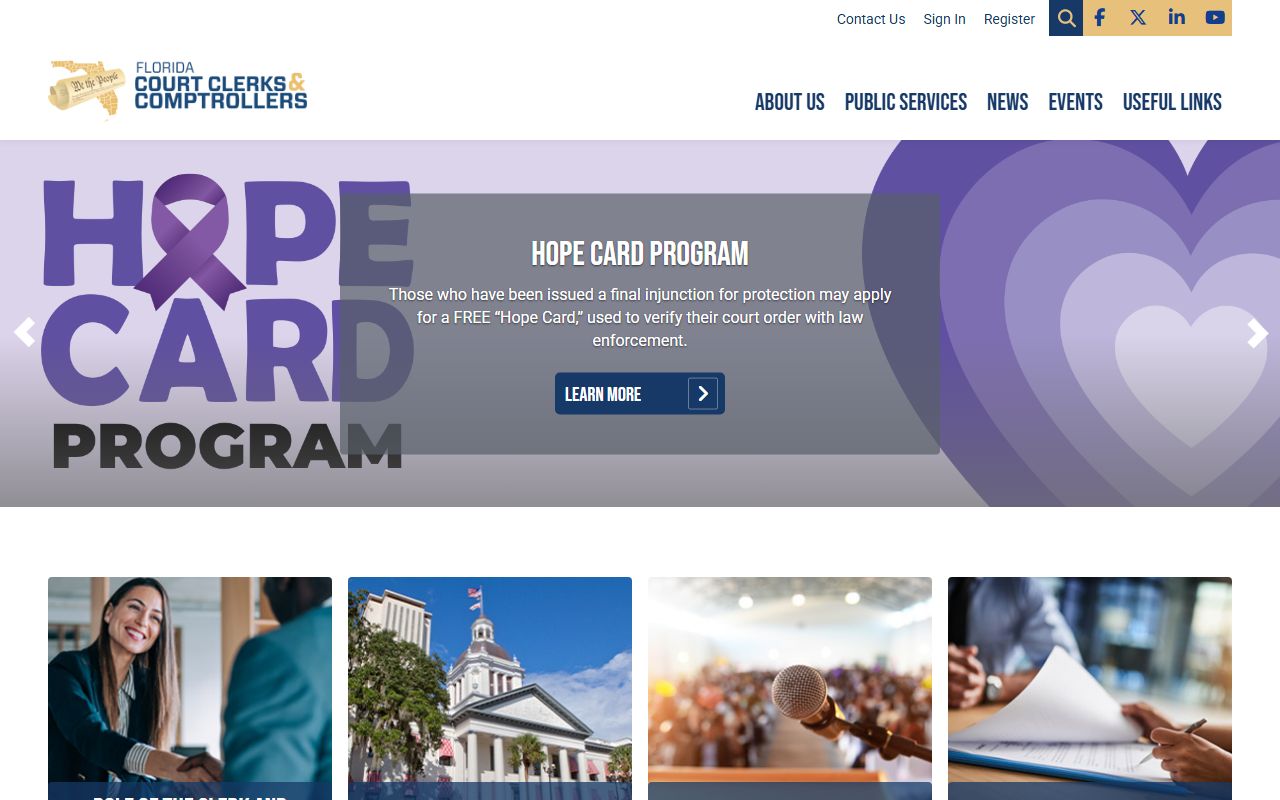
The Florida Court Clerks website helps locate the elected clerk in each of Florida's 67 counties.
How to Access Family Court Records
You can access Florida family court records in several ways. Online options offer convenience for basic searches. In-person visits work best when you need certified copies or want to review complete case files. Mail requests are available for those who cannot visit in person.
Many counties offer online case search through their Clerk of Court websites. The level of detail varies by county. Some provide basic case information only. Others offer document images for public viewing. MyFloridaCourtAccess.com is the statewide e-filing portal. While designed for filing cases, it also provides access to court records.
For child support payment records, MyFloridaCounty.com offers 24-hour access. You can view recent payments and case status. The State Disbursement Unit processes all child support payments in Florida. Their customer service line is available at (877) 769-0251 for questions about payments.
Visiting the Clerk's office in person gives you the most complete access. You can view case files and request copies of any document. Most clerks charge per page for copies. Certified copies cost more but include an official seal for legal use. Call ahead to confirm hours and fees at the specific clerk's office you plan to visit.
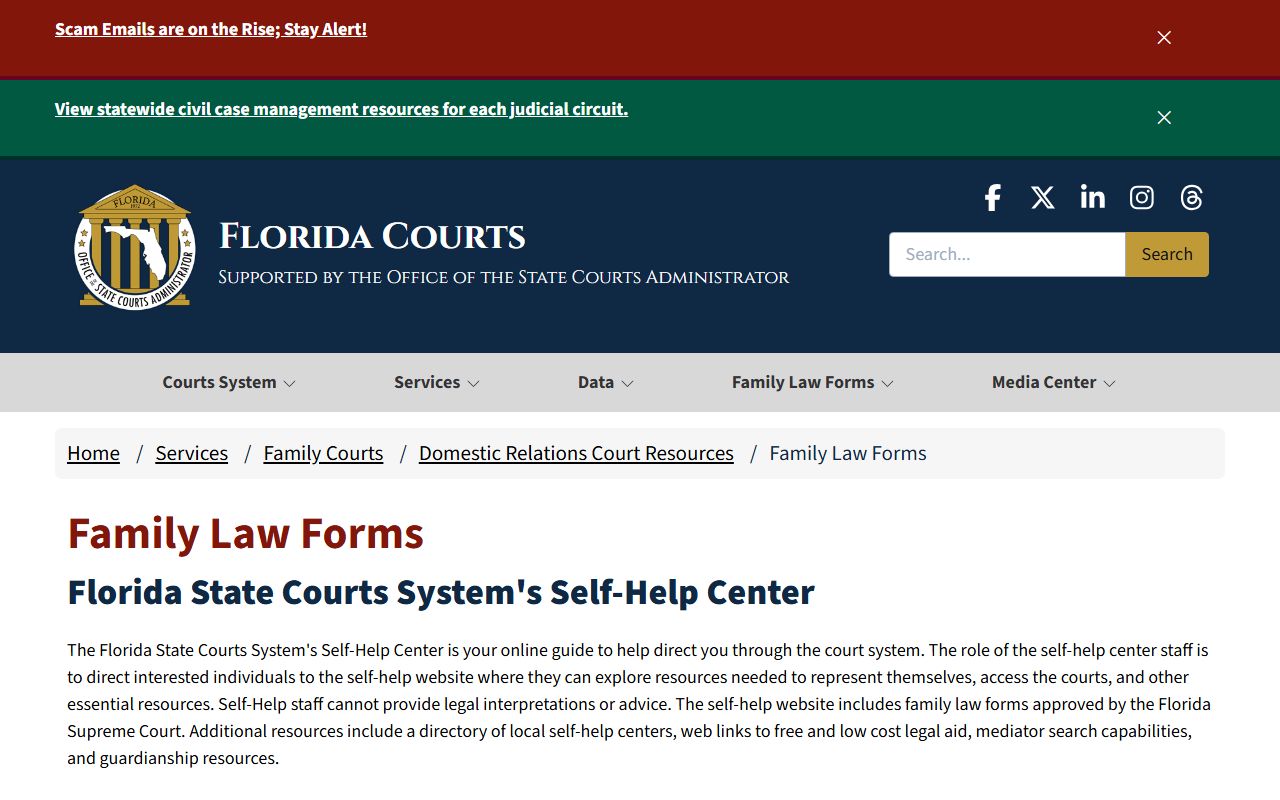
Florida's Self-Help Center provides approved family law forms for those representing themselves in court.
Child Support Records and Services
Child support is a major part of family court work in Florida. The state has created systems to help parents establish, modify, and enforce support orders. Both custodial and non-custodial parents can access records about their cases.
The Clerk of Court plays a key role in child support cases. They maintain payment records and can issue notices of delinquency when payments are late. If a payment is 15 days overdue, the clerk can send a notice. After 20 days without payment, a judgment may be entered. This judgment becomes a lien on the non-paying parent's property. The clerk can also help with income deduction orders that require employers to withhold support from paychecks.
The Florida Department of Revenue provides broader enforcement services. They can help locate absent parents, establish paternity, and enforce support orders across state lines. Their online application makes it easy to request services. Call (850) 488-KIDS (5437) for more information about child support enforcement in Florida.
Public Access to Florida Family Court Records
Florida has strong public records laws. Chapter 119 of Florida Statutes states that all state, county, and municipal records are open for inspection. This includes most court records. The law says that automation of public records must not erode the right of access.
Some family court records have restrictions. Section 119.0714 covers court files and records. Social security numbers and financial account numbers are kept confidential. Domestic violence petitions that are dismissed without a hearing are exempt from public records after July 1, 2017. Adoption records and cases involving minors may have additional protections.
The Clerk of Court must keep certain information confidential without anyone having to request redaction. This includes social security numbers, bank account numbers, and credit card numbers. If you find this information in a public record, notify the clerk so they can remove it.
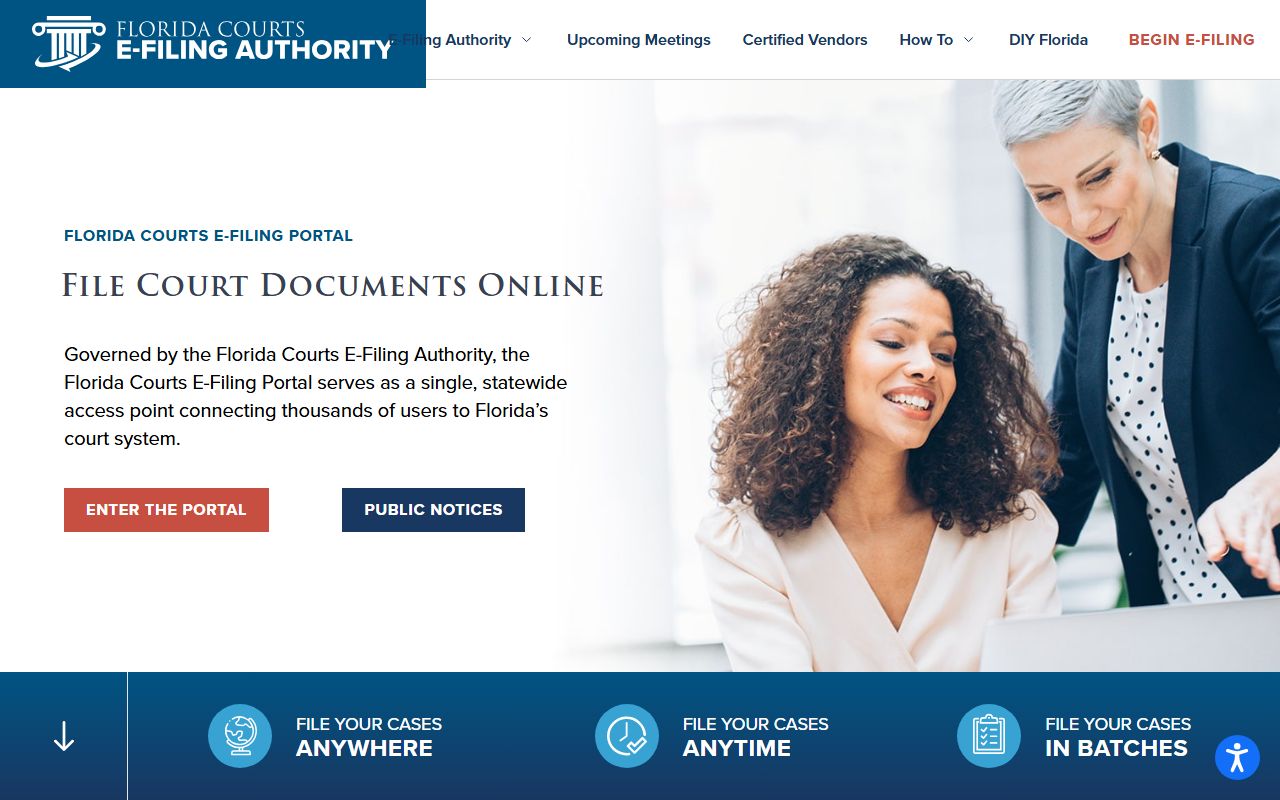
The e-filing portal provides electronic access to court records across Florida's 67 counties.
Self-Help Resources for Family Court Cases
Many people in Florida handle family law cases without an attorney. The courts provide resources to help self-represented litigants navigate the system. These resources include forms, instructions, and information about court procedures.
The Florida Courts Self-Help Center is the main resource for people representing themselves. The website explains how to get started with family law cases. It provides links to approved forms for divorce, child support, and custody matters. Important warnings are posted clearly. Staff cannot give legal advice. They can only help with administrative and procedural questions.
Forms on the website have fillable fields. You need Adobe Acrobat Reader to complete them on your computer. The forms work on mobile devices too. Each form includes instructions. Read these carefully before filling anything out. Some forms require notarization. Others need to be filed with specific accompanying documents.
Many counties have local self-help programs. These offer more personalized assistance than the state website. Check with your local clerk's office to see what programs exist in your county. Some courts have family law facilitators who can review your paperwork before you file.
Note: Self-help programs provide limited assistance only. They cannot tell you what legal strategy to use or predict how a judge will rule. For complex cases, consider consulting a family law attorney.
Browse Florida Family Court Records by County
Each of Florida's 67 counties maintains its own family court records. Click on a county below to find local contact information and resources.
Family Court Records in Major Florida Cities
Florida's largest cities fall within counties that maintain family court records. Select a city to learn about accessing records in your area.