
Marion County Family Court Cases and Records
Finding Marion County family court records starts with the Clerk of the Circuit Court in Ocala. This office maintains all documents filed within the 5th Judicial Circuit. Cases include dissolution of marriage, child custody matters, and domestic violence injunctions. The county seat is Ocala. The courthouse sits at 110 NW 1st Avenue. Staff handle thousands of family cases each year. Residents can access records online or in person. The process is straightforward once you know the right steps. This guide explains how to find the records you need.
Marion County Clerk of Court Office Location
The Marion County Clerk of Court maintains family court records at 110 NW 1st Avenue in Ocala, serving as the primary access point for all court documents related to family law matters. The office operates Monday through Friday from eight in the morning until five in the afternoon, with staff members available to assist with record searches throughout the business day. When visiting the courthouse, you must bring proper identification and be prepared for security screening at the entrance, as these are standard procedures for all visitors seeking access to court records and facilities. The centrally located Ocala courthouse is easily accessible from all parts of Marion County, with parking available nearby and the building fully accessible to accommodate all visitors regardless of mobility needs.
For those who prefer remote assistance, phone support is available at (352) 671-5614 for general questions about record searches and procedures. The staff can explain search procedures in detail, inform you about required forms, and clarify which records require proof of identity versus those open to public view. Additionally, the clerk's website offers convenient online tools that allow you to search cases from the comfort of your home, providing an alternative to in-person visits for many types of record inquiries.
The staff at the Marion County Clerk's office understand that family court matters are sensitive and deeply personal, and they are committed to providing courteous service while respecting your privacy during all interactions. Whether you visit in person or contact them by phone, you can expect professional assistance from knowledgeable staff who handle thousands of family cases annually and understand the importance of efficient, respectful service.
| Address | 110 NW 1st Avenue, Ocala, FL 34475 |
|---|---|
| Phone | (352) 671-5614 |
| Website | marioncountyclerk.org |
| Circuit | 5th Judicial Circuit |
| Hours | Monday through Friday, 8:00 AM to 5:00 PM |
Marion County Family Court Record Types
The Marion County Clerk maintains several distinct categories of family court records, each serving different legal purposes and containing specific documentation relevant to particular case types. Dissolution of marriage files are among the most commonly requested records, documenting divorce proceedings from the initial petition through final judgment, including property settlements that detail how marital assets and debts are divided between parties and parenting plans that establish custody arrangements and time-sharing schedules for children. These comprehensive files often contain financial affidavits disclosing each party's income and assets, marital settlement agreements when spouses reach mutually acceptable terms, and final judgments that officially terminate the marriage under Florida law.
Child custody records detail time-sharing arrangements with particular attention to visitation schedules that specify when each parent spends time with their children, including holiday plans designed to prevent conflicts during important family celebrations and school break arrangements that ensure continuity for children during vacations. These records also establish decision-making authority regarding education, healthcare, and religious upbringing, while child support orders specify monthly payment amounts and address medical and dental coverage provisions. When circumstances change significantly, modification petitions update existing orders to reflect new realities such as income changes, relocation, or evolving children's needs.
Domestic violence injunction cases create protective records that begin with petitions and may include temporary ex parte orders providing immediate protection, followed by final injunctions that last for specified periods with violations documented and prosecuted. Access to these records may be limited based on safety concerns, as privacy laws protect victims from unnecessary exposure. Paternity cases establish legal fatherhood and often lead to related custody and support proceedings, while name change petitions for both adults and minors are also processed through the family court system, with each record type following specific procedural rules that the clerk organizes and maintains with professional care.
How to Access Marion County Family Records
Searching for Marion County family court records offers two main pathways: online tools for convenient remote access or in-person visits for comprehensive document review, with each method offering distinct benefits depending on your specific needs. Online searches work exceptionally well for quick status checks and basic case information, while in-person visits provide full access to complete case files including documents that may not be available electronically. The My Florida Court Access portal covers Marion County through this statewide system, allowing you to enter a name or case number to view case status, party names, scheduled hearings, and final judgments, with some documents viewable directly online while others require office visits for security or privacy reasons.
In-person searches at the courthouse located at 110 NW 1st Avenue provide the most comprehensive access to family court records, with clerk staff available to search by party name, case number, or date range depending on what information you have available. Public computers are available for self-directed searches, and staff members are ready to help with difficult searches or complex requests that may take additional time to process. For best results, gather as much information as possible before searching, including full legal names of all parties, approximate date ranges for when the case was filed or resolved, and any case numbers you may have from previous court documents or attorney correspondence.
Effective record searches require preparation and attention to detail, particularly when dealing with common names or cases spanning multiple years. If you lack specific case numbers, bring all relevant details you have, including alternative name spellings, previous addresses, or attorney names that might help narrow the search. The clerk's website provides helpful tips for conducting efficient searches, and staff are trained to assist visitors in locating records even with incomplete information, though having specific details significantly speeds the process.
For those needing certified copies of records for legal purposes, the clerk's office provides this service for a fee, with certified copies serving as official documentation accepted by courts, government agencies, and other entities requiring verified records. Standard copies are also available at a lower cost per page for personal reference or research purposes. Understanding the difference between certified and standard copies helps ensure you request the appropriate documentation for your specific needs, saving time and expense while ensuring you receive records in the format required for your intended use.
5th Judicial Circuit Information
Marion County belongs to Florida's 5th Judicial Circuit, which encompasses five counties total: Citrus, Hernando, Lake, Sumter, and Marion, with the circuit court handling all family law matters that fall under its jurisdiction. Circuit judges preside over these cases, ruling on divorces, custody disputes, and domestic violence matters with the authority to issue binding decisions that affect families throughout the circuit. The circuit maintains standardized record-keeping procedures across all counties, ensuring consistency that helps when cases involve parties from multiple jurisdictions or when records need to be transferred between courthouses within the circuit.
Family court hearings occur at the Ocala courthouse located at 110 NW 1st Avenue, with all proceedings centralized at this location for Marion County residents. Court notices specify exact rooms and times for hearings, and it is essential to arrive early to allow time for security screening at the entrance. Required identification must be brought to all court appearances, and appropriate dress is expected as a sign of respect for the judicial process. The 5th Circuit works efficiently to serve its large population area, with family law divisions staffed by experienced judges and support personnel who understand the complex emotional and legal issues involved in family court matters.
Marion County Clerk Website and Records Images
The Marion County Clerk of Court provides online access to their homepage and resources.
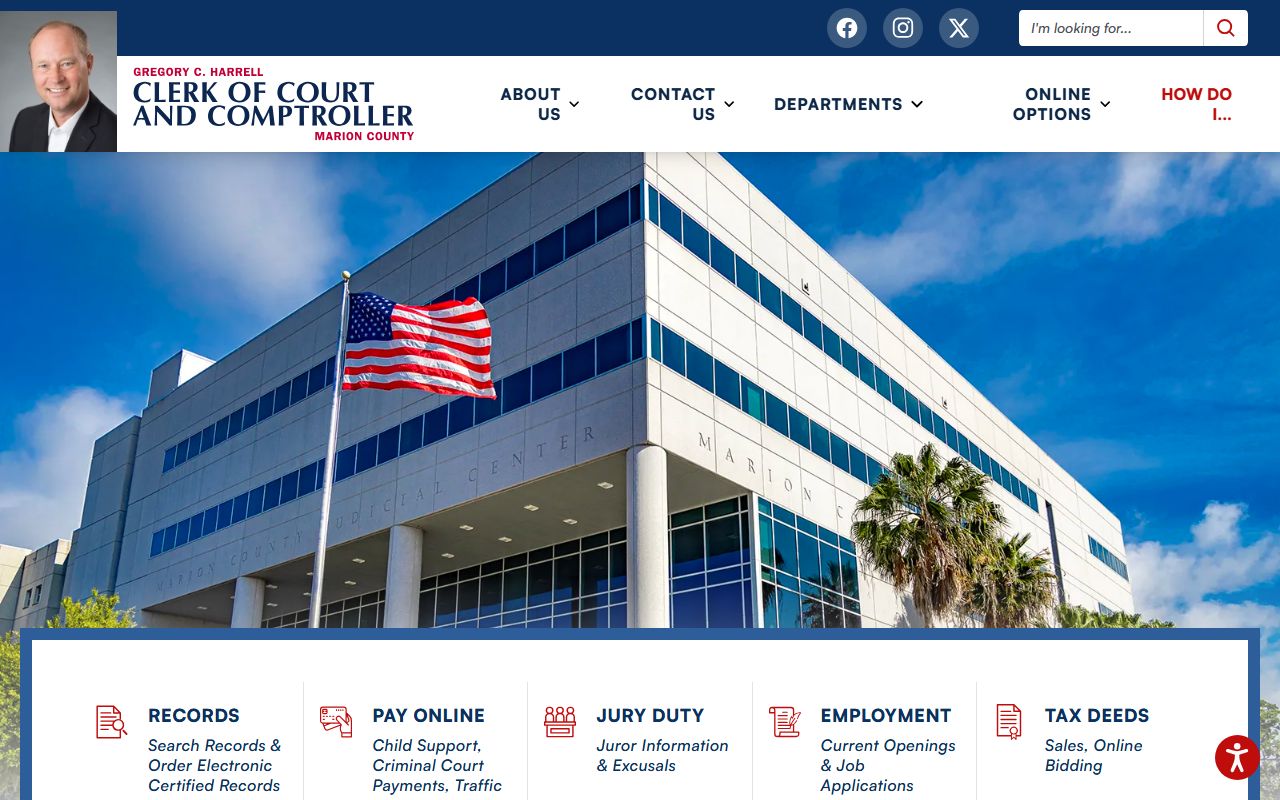
The website offers tools for searching family court cases and accessing public records information.
The court records search system allows detailed lookups.
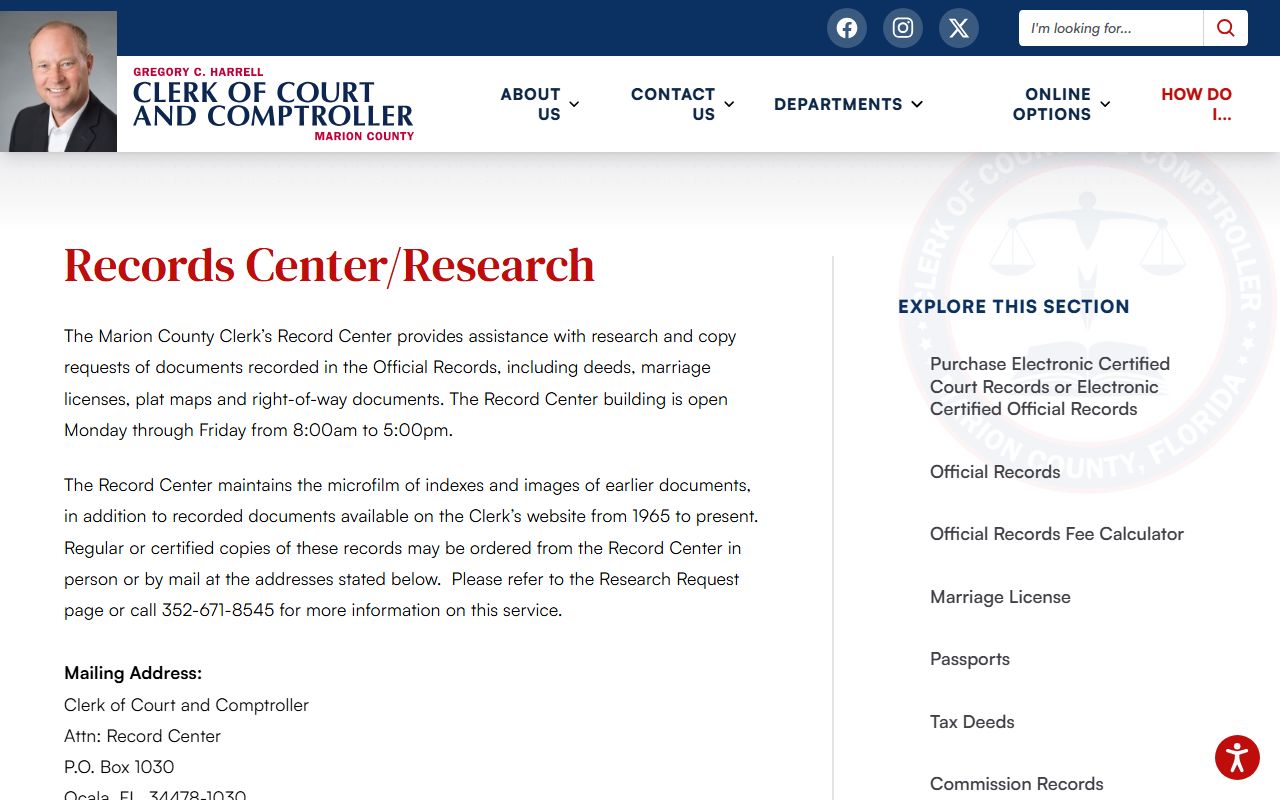
Users can search by name or case number to find family court documents and case details.
Getting Help with Marion County Records
Staff at the Marion County Clerk's office are ready to assist with record searches, guiding you step by step through the process whether you contact them by phone at (352) 671-5614 or visit in person at the Ocala courthouse. Calling ahead with questions saves time during your visit, as staff can explain what documents you need to bring and what fees to expect for copies or certified records. The website features a comprehensive FAQ section that answers common questions about record access, search procedures, and document availability, with forms available for download and clear instructions that are updated regularly to ensure accuracy.
For complex searches involving extensive records or complicated legal histories, consider seeking assistance from legal professionals who know the system well and can locate records quickly and efficiently. Attorneys and paralegals have experience navigating the clerk's systems and can often identify relevant records that might be missed in self-directed searches. Additionally, self-help resources are available for pro se litigants representing themselves in family court matters, with the clerk's office providing guides and instructional materials designed to help individuals understand the record search process and access the documents they need for their cases.